About 10 bishops and 50 theologians from across the country gathered at the Pastoral Centre, Agra on 25th/ 26th July for the 27th Colloquium of the CBCI’s Commission for Doctrine. As a layman I was the only cockroach. The theme was: A Rereading of the Theological Journey of Pope Benedict 16 (Joseph Ratzinger).
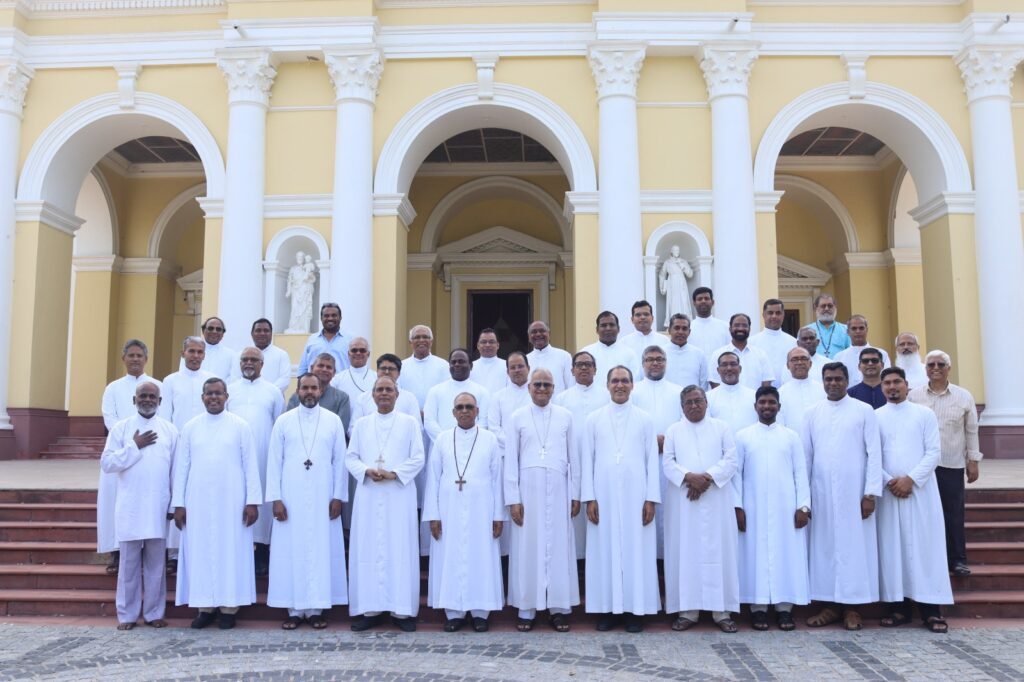
Rev Dr A Sebastian, rector of St Joseph’s Seminary, Allahabad and Secretary of the commission, who had invited me, in his welcome said that Agra was an appropriate venue for theological discussion, as it had begun 500 years earlier when Emperor Akbar had invited some Jesuits from Goa to his court.
The colloquium was inaugurated by Msgr Alberto Napolitano, the Charge de Affairs at the Apostolic Nunciature, New Delhi. He observed that Benedict was a good listener. For him truth was never opposed to love, while faith and reason complimented each other. Theology finds fruit in prayer and such discussions must find fruit in pastoral life. Subsequently Bp Gerald Mathias of Lucknow endorsed Benedict’s ability to listen. He always maintained eye contact with whomsoever he was talking to, he said.
Abp Raphy Manjaly of Agra, the host, is the Chairperson of the CBCI Commission for Doctrine. For him theology cannot be divorced from reality. He made pointed reference to the Cockroach Janata Party agitation in Delhi. We cannot be indifferent to the pain and uncertainty of the students. He opined that Christian theology views God as one who refuses to remain distant. Only a God who has experienced suffering can understand human suffering. Religious dialogue does not require of us to dilute our faith. Furthermore, fidelity and compassion are not rivals, he said.
Abp Albert D’Souza, his predecessor in office, said that dogmas are not static. They must be dynamic. Our thinking should also be tailored to the Indian context. Thereafter Rev Thomas Vadakkel, who had been the Commission’s Secretary for the last seven years, explained the dynamics of the colloquium. It must be said to his credit that his humble, unassuming and unflappable nature contributed in large measure to the skillful functioning of the colloquium.
I say this because 16 papers on different aspects of Ratzinger’s theology were presented over a period of just 1½ days. That could have caused ennui. Not so. The presenters and moderators ensured that time limits were maintained, leaving enough time for clarifications and interactions that were valuable in themselves.
I must add a caveat here. This is not an exhaustive report of the colloquium. Nor is it an attempt to record everything that transpired. While objectively reporting some of the salient features of the colloquium, I will also add my subjective experiences and reflections on the same.
The presentations were based on Ratzinger’s teachings, pre and post becoming pope. They covered diverse topics like History and belief in Jesus of Nazareth, Historical Jesus and the Christ of Faith, Uniqueness of Christ in a Pluralistic Context, Biblical Interpretation, Crisis of Truth in Modernity, Death Judgment Heaven and Hell, Hermeneutics, Communion to Divorced and Remarried Catholics, Christian Anthropology etc. Most of the presenters were seminary professors with doctorates in various fields. To their credit they were faithful to their mandate on Ratzinger’s teachings. However, that also closed the door to other opinions on the same issue. To arrive at a synthesis it is not enough to have a thesis; there should also be the anti-thesis.
One of the most interesting topics for me was the “Uniqueness and Universality of Jesus” presented by Gilbert de Lima of Pius X Seminary, Mumbai. Did Christian discipleship lead to exclusivism, inclusivism or pluralism? Exclusivism as propounded by St Cyprian of Carthage in the 3rd Century was “Extra ecclesium nulla salus” (There is no salvation outside the Church). Inclusivism meant that salvation was for all, by the grace of God. This is the official stand of the Catholic Church today as found in “Lumen Gentium” (No 16) and “Gaudium et Spes” (No 22). Pluralism, however, was like saying that all religions were the same and all paths lead to God.
Another important point that arose was that of Jesus transcending time and space. So salvation was not limited to those who were born post the Incarnation, death and resurrection of Jesus. This would be in consonance with the very nature of God, being true, just and merciful.
Bp Mar Thomas Padiyath, auxiliary bishop based in Etawah spoke on the “Dictatorship of Relativism”, a term that I found self-contradictory. If relativism, as described by Ratzinger is “letting oneself be tossed here and there carried about by every wind of doctrine”, then in my opinion it is liberalism and far from being a dictatorship!
Probably the mostly hotly debated topic was on “Holy Communion to Divorced and Remarried Catholics” presented by Liju Porathur CMI. The bone of contention was Ratzinger himself retracting his own earlier statement on there being a window of opportunity for those in such a predicament. As the only married person present I had much to say on the issue that I incorporated in the summation that I was asked to make at the end.
Ratzinger seemed rigid in his perception of truth and looked with suspicion on any form of “relativism”, and its fluidity. When the presenter, Antony Sathiyaseelan MSFS kept on hammering away at Ratzinger’s perception of “truth” I could contain myself no longer and blurted out; it was Pontius Pilate who infamously asked Jesus “What is truth”; to which providentially Jesus did not proffer any answer or definition.
I will now share some of my other observations:
- If faith is not determined by public opinion then what is the meaning of “Vox populi, vox dei” (the voice of the people is the voice of God), and “sensus fidei” (the sense of the faithful”? While not absolute in themselves, they cannot be ignored by theologians when talking about truth, doctrine or absolutism.
- Of the 16 presenters only one, Bilju Vazhappilly, began with a prayer.
- Most of the presenters used power point presentations, thereby severely restricting their ability to express themselves. It was only the two youngest presenters, Liju Porathur CMI and Sathiyaseelan, whose body language spoke. We need to recall that Jesus the greatest communicator did not use theories but simple parables to expound great truths.
- As far as I can recall there were no references to Sacred Scripture. It reminds me of what the Dogmatic Constitution on Divine Revelation says: “The teaching office of the Church is not above the Word of God, but serves it” (DV No 10).
- Regarding communion to Divorced and Remarried Catholics (DARCs) I referred to the Jansenist heresy of the 17th century that averred that communion was a reward for being good, while the Church affirms that it is a means of sanctification for those in need. I also quoted Canon Law 1095:1-3 and 1097 on the basic requirements for a valid marriage. By those criteria just nobody can claim to have a sacramental marriage!
- I now have a supplementary question. Ordination to the priesthood is also a sacrament that enjoins perpetuity. Yet priests are relieved from it, despite years in formation, for which lakhs of rupees are spent. In contrast marriage preparation is usually a hurried three day affair when the ink has not yet dried on the wedding invitations. I see this as hierarchical over reach when it comes to the pastoral care of the laity. It is for this reason that several years ago I had coined the statement “How can celibate old males in boardrooms determine what young couples do in their bedrooms?” We must find a pastoral solution to this vexatious issue. It can no longer be pushed to the back burner.
- In my summation I had also requested that the next colloquium, besides the DARCs issue, should also address other burning issues like Conversions and Synodality.
- In the past Cardinal Mar Basileous took on the Vatican when it looked with suspicion on Indian theologians. For too long Christian theology has been dictated to by European parameters. Just as South America evolved its own Liberation Theology, Indian theologians need to evolve their own Indian Catholic theology, based on the realities of a pluralistic society.
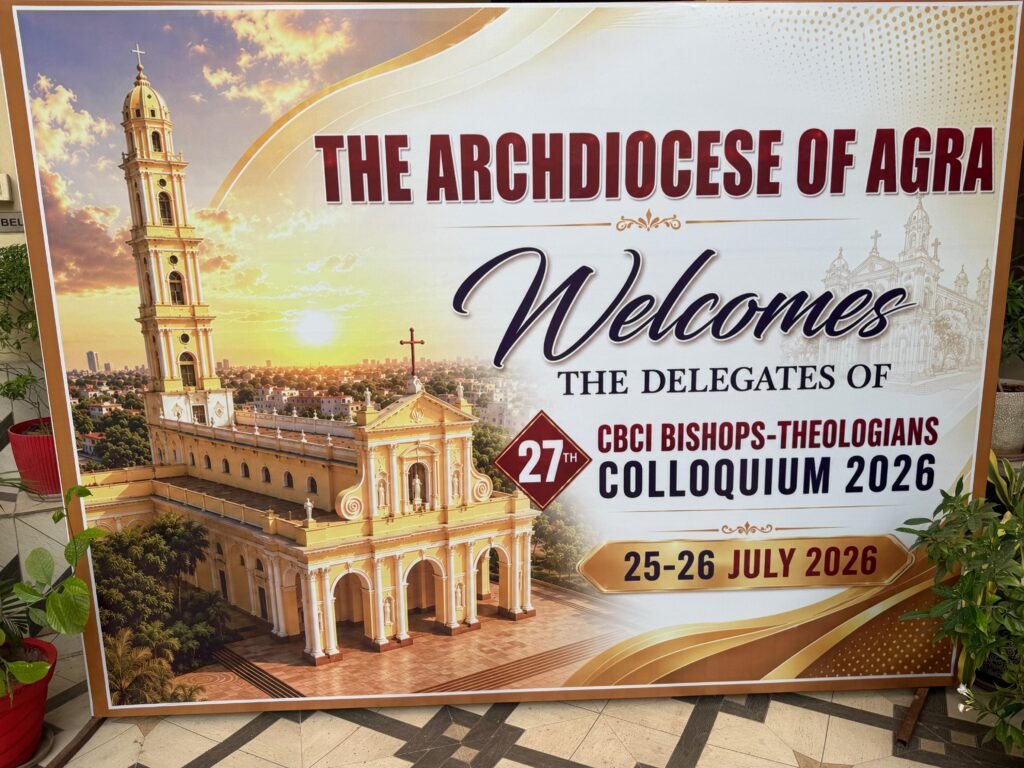
In his concluding remarks Abp Raphy warned that theologians should not fall into the “paralysis of analysis”. It is also easy for theologians without responsibilities to give suggestions to others who are answerable to the people for ecclesiastical governance. He also hoped that the next colloquium would have women theologian participants. In response A Sebastian said that he had indeed invited some, but they declined when they heard it was about Ratzinger! Not surprising.
I conclude with what some of the international press said about Benedict’s resignation in February 2013. London based Faroukh Dhondy wrote in the Hindustan Times dt 15/2/2013 “Nothing behoves Benedict’s office as his leaving of it”. Bennet Voyles of Paris wrote on 17/2/2013, “The first pope to walk away in 600 years may prove that it was the most positive act of his seven year reign”. On 12/2/2013 AFP Ireland wrote “A group representing victims of child abuse in Catholic run institutions in Ireland welcomed the resignation after he promised a lot but delivered nothing”.
Back home Desmond deSouza CSsR wrote in his book “Glimpses into the Uniqueness of Recent Popes” that “He iron fistedly cracked down on some of the most esteemed theological thinkers in the church: Hans Kung in Europe, Leonardo Boff in South America and Tissa Balasurya in Asia”. This “raised serious doubts about the extent of the pope’s commitment to Vatican II renewal … even though it did not discard any dogma of the Church, nor promulgate any new one”.
I attended this colloquium more out of curiosity than conviction. By curiosity was aroused and my convictions coalesced even more that Benedict’s greatest service to the Church was his abdication of the papacy. Sometimes even the cockroaches win.


Leave a Reply