Shouldn’t Melania be jealous of this relationship with another woman? No, because Esther is not a threat to her marriage. To the contrary; she is an asset for her husband. This Esther is the Jewish heroine of the Old Testament.
I am not enamoured of Old Testament chronicles and had not read the book of Esther that is usually clubbed with Tobit and Judith. I was compelled to do so after I saw a report about various Christian pastors praying for the success of Trump’s Epic Fury/ Colossal Failure in Iran. Among them was Frank Graham son of renowned evangelist Billy Graham.
They quoted the book of Esther, because it recounts incidents from Persia, modern day Iran. It records that because of Esther’s efforts 75,000 enemies of the Jewish people were killed. So why wouldn’t Donald love Esther, just as he loves Netanyahu? Sadly, half-truths are more dangerous than a lie, which is why I chose to study the Book of Esther. My findings may startle Donald and his acolytes.
Those of us in India would find this book even more interesting because it mentions India several times, clubbed with Ethiopia and 127 other provinces of the Persian Empire. There are also two names that sound very Indian – Vashti and Gaumata. Vashti means exceedingly beautiful in both Persian and Hindi. Darius became king of Persia after overthrowing King Bardiya who he claimed was an impostor named Gaumata. This could be a corruption of Gautam, a name then prevalent in India, as he was a contemporary of Gautam Buddha in the 5th/6th centuries BC.
Some respondents to my articles and videos have asked me to enlighten them about Esther and why some evangelical Christians, and some right wing Catholics, are supporting Trump’s madness. This necessitated some serious study.
Biblical scholars tell us that there are two versions of the book, a shorter one in Hebrew dating to about 160 BC, while the Greek version that includes the Hebrew text, dates to about 114 BC. The Catholic Church accepted the longer Greek version as late as the Council of Trent in the 16th century CE. It is counted among the Deutro-Canonical books; that is the Second Canon. Canonicity is the identification of those books/ texts that constitute the Bible. Non-Catholics consider the Greek text as apocryphal; that is of questionable authenticity.
It is important to note that the Hebrew text has no mention of God or divine intervention. It glorifies Esther, a Hebrew woman and her cousin Mordecai, who raised her after the death of her parents. In contrast the Greek text has repeated references to God and his power used to protect his chosen people.
The events that unfold are during the reign of the Persian king Ahasuerus, that translates into Greek as Xerxes. He is a successor to Kings Cyrus and Darius. These names are common among Parsis (Pharsees or Persians) in India. Xerxes the Great reigned from 486 to 465 BC. It is he who invaded Greece but was defeated at the famous battle of Thermopylae. The Marathon battle between those two kingdoms also took place in that period.
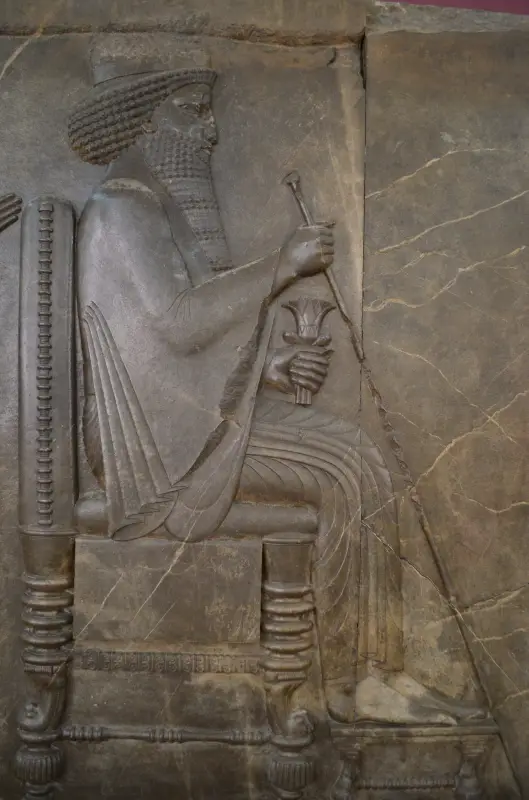
However, Biblical scholars tell us that the events related in the Book of Esther are not historical. At most it is an inspiring legend. Nevertheless there is no harm in recounting the story as found in the Bible. At that time several Jews, as also other races, were living in the kingdom. Since it had 127 provinces there would have been much ethnic diversity.
Queen Vashti was the king’s wife. The king wanted to show off her beauty to his courtiers and ordered her to present herself. She refused. The courtiers then said to the king that “The queen’s conduct will soon become known to all the women, who will adopt a contemptuous attitude towards their husbands” (Es 1:17). They prevailed upon the king to divest her of her royal status so as to send out a message that “all the women will henceforth bow to the authority of their husbands” (Ibid 1:20). The king then sent letters to all his provinces, to ensure “that every husband should be master in his own house” (Ibid 1:22). Just as with King Herod 5 centuries later, courtiers knew how to manipulate the egos of their leaders. On the other hand Vashti could be a role model for women today. In Persian her name means beautiful or best; while Vyashti, a Sanskrit word used in praise of the divine, means complete. So could Vashti be a corruption of Vyashti, and possibly of Indian origin?
What next? A search was launched “for beautiful young virgins” (Ibid 2:3). Among the finds was Esther who “had a good figure and a beautiful face” (Ibid 2:7). After 12 months of beauty treatment with myrrh oil, spices and lotions (Ibid 2:12) she was presented to the king who “proclaimed her queen instead of Vashti” (Ibid 2:17).
As with palace intrigues, two eunuchs planned to assassinate the king. Mordecai came to know of it and informed Esther who in turn warned the king. The conspirators were sent to the gallows while Mordecai and Esther grew in stature before the king.
Shortly thereafter the king promoted one Haman, who was probably of Macedonian descent, as his second in command. Everybody in the king’s court bowed and prostrated before him. Not Mordecai, whose Jewish beliefs forbade him from doing so. This infuriated Haman who now plotted “to wipe out all the members of Mordecai’s race, the Jews living in the empire” (Ibid 3:6).
Haman prejudiced the mind of the king saying that the Jewish people did not assimilate with the rest of Persian society. They had their own laws and did not follow the royal laws, “hence it is not in the king’s interest to tolerate them” (Ibid 3:8). Consequently “letters were sent by runners to every province of the realm, ordering the destruction, slaughter and annihilation of all Jews, young and old, including women and children, on the same day” (Ibid 3:13).
This would have been the end of the Jews in the Persian Empire. Mordecai sent word to Esther to “invoke the Lord, to speak with the king for us and save us from death” (Ibid 4:8b). Esther then asks Mordecai to tell the Jews to fast and pray. “All Israel cried out with all their might, since death was staring them in the face” (Ibid 4:17i). Esther also prays: “Oh God, whose strength prevails over all, listen to the voice of the desperate, save us from the hand of the wicked, and free me from my fear” (Ibid 4:17z). This is because nobody could enter the presence of the king without being summoned, under pain of death.
She summons up the courage to go to the king and invite him and Haman for a banquet. On the other hand, fuming at Mordecai’s insolence Haman prepares the gallows for him to be hanged. To cut a long story short, Esther tells the king that it was Haman who had plotted the annihilation of the Jews. “So Haman was hanged on the gallows that he had erected for Mordecai” (Ibid 7:10).
Esther then beseeches the king to rescind the order for the annihilation of the Jews. The king says, “Write what you please as regards the Jews in the king’s name” (Ibid 8:8). With a swing of the pendulum “the king granted the Jews, in whatever city they lived, the right to assemble in self-defense, with permission to destroy, slaughter and annihilate any armed force of any people or province that might attack them, together with their women and children and to plunder their possessions” (Ibid 8:11). Small wonder then that Trump and Netanyahu love Esther. But they forget that this was for self-defense, if attacked, which is not the case in the Iran war.
We further read that “they slaughtered seventy five thousand of their opponents” (Ibid 9:16). However, the Greek text puts the number at a more moderate fifteen thousand. End of story.
Let me now reiterate that the Esther story as it now exists, “is a fictional narrative” according to the highly regarded Jerome Biblical Commentary. It goes on to call it the “fertile imagination of later translators/ authors”.
In conclusion let me also state that King Ahasuerus (Xerxes) was the one who protected the Jews. He was Persian, not Muslim, and his religion was probably what we today call Zoroastrianism. Those allegedly killed by the Jews were also not Muslim, as Islam entered some 1100 years later. The victims would also not have been Persian, as no king would have allowed the slaughter of his own people by foreigners in his land.
There is one more record that needs to be set straight. King Cyrus the Great of Persia is the one who arranged for the Jews to be freed from the Babylonian captivity, gave funds for the building of Solomon’s Temple in Jerusalem and returned the sacred vessels that had been looted by the Babylonians (modern day Iraq). This is how the Bible describes it:
“Cyrus King of Persia says this – Yahweh, the God of heaven, has given me all the kingdoms of the earth and has appointed me to build him a temple in Jerusalem, in Judah. Whoever among you belongs to the full tally of his people, may his God be with him! Let him go up to Jerusalem, in Judah, and build the Temple of Yahweh, God of Israel, who is the god in Jerusalem. And let each survivor, wherever he lives, be helped by the people of his locality with silver, gold, equipment and riding beasts, as well as voluntary offerings for the Temple of God that is in Jerusalem” (Ezra 1:2-4).
Whether authentic, apocryphal or allegorical, the Bible story does not support the invasion/ destruction of Persia (modern day Iran) by either the Americans or the Israelis. Any attempt to use the Bible to justify their actions would be an abomination in the eyes of the Lord.
I hope and pray that these reflections will to some extent assuage the doubts and feelings of well-meaning Christians, Jews and Muslims. Shalom – Salaam – Shanti.


Leave a Reply